
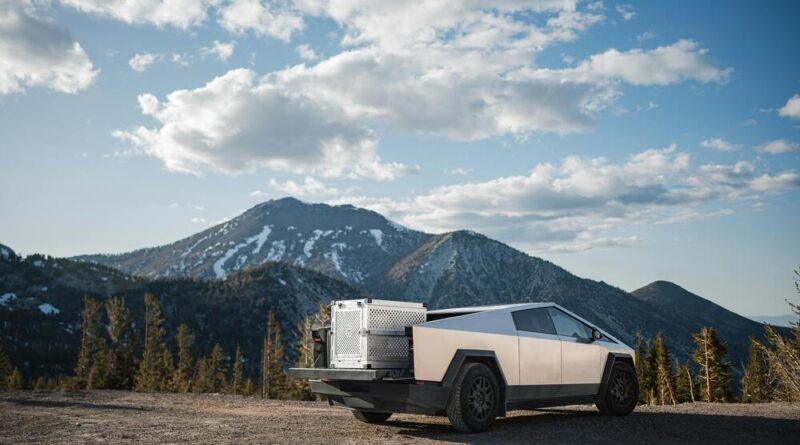
The Car as a Cultural Icon in Transition
Countdown to the EV Cultural Impact Awards
Days --
Hours --
Minutes --
Seconds
From symbols of freedom and rebellion to emblems of sustainability and interconnection—how our relationship with automobiles is being fundamentally redefined
The automobile occupies a unique space in modern consciousness. It’s been a teenage rite of passage, a promise of adventure, an expression of personal identity, a facilitator of suburban sprawl, an object of lust and aspiration, and a villain in our climate story. As we transition to electric vehicles, we’re not just swapping powertrains—we’re renegotiating a complex, century-long relationship between humans and cars that has profoundly shaped how we live, work, and understand freedom itself.
The Romance of the Road
To understand where we’re going, we need to acknowledge where we’ve been. The automobile’s cultural power has always transcended its utilitarian function. Jack Kerouac’s “On the Road” wasn’t really about getting from San Francisco to New York—it was about freedom, possibility, and American vastness. Bruce Springsteen’s “Thunder Road” used a car as a metaphor for escape and transformation. The Beach Boys sang about cars with the same breathless enthusiasm they brought to surfing and romance.
This wasn’t accidental or shallow. The car genuinely represented something profound: the ability to move through space independently, to go where you wanted when you wanted, to escape constraint and routine. For post-war generations, a driver’s license meant independence from parental oversight. For suburban communities, cars enabled a particular vision of American life—single-family homes with yards, separated from urban density and public transit’s schedules and routes.
The car also became an extension of self. Muscle cars expressed rebellion and physical power. Sports cars signaled success and sophistication. SUVs projected rugged individualism. The vehicle you drove told a story about who you were or aspired to be. Entire subcultures—hot rodders, lowriders, tuners—formed around automotive modification and expression.
Even the experience of driving carried cultural weight. The rumble of a V8 engine, the mechanical precision of shifting gears, the smell of leather and gasoline—these sensory experiences weren’t incidental; they were central to what made cars emotionally resonant. Car enthusiasts speak about the “soul” of vehicles, and they’re referring specifically to these visceral, mechanical qualities.
The Growing Disillusionment
But over recent decades, the car’s cultural status has become increasingly complicated. Traffic congestion turned liberation into frustration. Suburban sprawl’s environmental and social costs became undeniable. Rising awareness of climate change cast automobiles—particularly oversized, inefficient ones—as villains rather than heroes.
Urban revitalization movements began questioning car-centric planning. Cities like Copenhagen and Amsterdam demonstrated that prioritizing cycling, walking, and public transit could create more livable, healthier, more economically vibrant communities. Young people in major cities began getting driver’s licenses later or not at all, choosing ride-sharing and transit over the burden of car ownership.
The cultural narrative shifted. Cars went from symbols of freedom to symptoms of isolation, from expressions of individuality to evidence of environmental irresponsibility, from technological marvels to necessary evils. The very features that once made them appealing—size, power, noise—became markers of excess and selfishness in an increasingly climate-conscious culture.
This created a cultural problem for the automotive industry. How do you maintain emotional appeal for a product increasingly associated with problems rather than solutions? How do you preserve the positive cultural associations while acknowledging legitimate concerns?
Enter the Electric Vehicle
Electric vehicles arrived into this complex cultural moment carrying contradictory meanings. For some, they represented redemption—a way to maintain personal mobility while reducing environmental impact. For others, they were expensive virtue signals, toys for wealthy coastal elites. For car enthusiasts, they threatened to eliminate the visceral qualities that made cars emotionally engaging. For environmentalists, they were inadequate half-measures when systemic transformation of transportation was needed.
What’s fascinating is watching how these meanings are evolving and multiplying as EVs move from niche to mainstream. The cultural narrative of electric vehicles is being written in real-time, and it’s far more complex than simple binaries of good versus bad, green versus traditional.
New Symbols, New Stories
Electric vehicles are developing their own cultural associations distinct from both traditional automobiles and environmentalism. Tesla successfully positioned its vehicles as technology products rather than eco-compromises—fast, sophisticated, innovative. This reframing attracted buyers who would never consider a Prius but were enthusiastic about tech and performance. The environmental benefits became almost secondary to the narrative of technological advancement.
Rivian has crafted a different story, positioning EVs as adventure vehicles that enhance rather than limit outdoor access. Their campaigns feature vehicles on mountain roads and desert trails, consciously evoking traditional outdoor advertising while subverting the expectation that electric means urban and limited. It’s a clever cultural move: maintaining the romance of the road while updating it for climate consciousness.
Porsche’s approach with the Taycan addresses enthusiast concerns directly. The vehicle doesn’t try to replicate internal combustion sounds or sensations—it establishes new performance metrics and experiences. It’s faster than the iconic 911 in many measures, but more importantly, it feels legitimately exciting in different ways. This allows car culture to evolve rather than end, preserving enthusiasm while adapting it to new technology.
These aren’t just marketing strategies—they’re cultural negotiations, attempts to preserve certain valued aspects of car culture while transforming others. The question is which values survive the transition and which are necessarily lost.
Community and Identity Transformation
Car culture has always been communal. Car clubs, meetups, races, and shows created social bonds around shared automotive passion. There was genuine concern that EVs, being more homogeneous and less mechanically accessible, would undermine these communities.
Something unexpected has happened: EV culture is developing its own community forms. Tesla owners gather at Supercharger stations, swapping stories about road trips and software updates. Online forums buzz with discussions of charging strategies, range optimization, and emerging technology. Clubs like the EV Track Drive Events bring electric vehicle enthusiasts together for performance driving experiences.
These communities feel different from traditional car culture. There’s less emphasis on mechanical modification (though wrapping and customization remain popular) and more focus on software, updates, and efficiency optimization. The conversations are less about horsepower and exhaust notes, more about kilowatt-hours and regenerative braking strategies.
Interestingly, this has made automotive enthusiasm more accessible in some ways. Traditional car culture often required mechanical knowledge and tools that created barriers to entry. EV culture is more software-oriented, and many people feel more comfortable with digital interfaces than mechanical systems. Women and younger enthusiasts, sometimes marginalized in traditional car culture, are finding more welcome spaces in EV communities.
Freedom Redefined
Perhaps the most profound cultural shift involves redefining automotive freedom itself. The traditional narrative—the open road, going anywhere, complete independence—always contained contradictions. You were free to go anywhere as long as gas stations and roads existed. You were independent as long as you could afford fuel, insurance, and maintenance. The freedom was real but conditional.
Electric vehicles make these conditions more explicit. Range limitations and charging requirements force more planning. But advocates argue this isn’t losing freedom—it’s exchanging one set of constraints for another while gaining benefits like lower operating costs, reduced maintenance, and environmental improvements.
More interestingly, some EV proponents are reimagining automotive freedom entirely. Instead of emphasizing unlimited range for hypothetical cross-country trips most people never take, they focus on the daily freedom of home charging—never needing to visit gas stations. Instead of independence through isolation, they emphasize connection through sophisticated navigation and charging networks. Instead of individual freedom through vehicle ownership, some advocate for freedom through access—shared vehicles, autonomous fleets, multimodal transportation.
This isn’t just rebranding—it’s a genuine philosophical shift about what freedom means in an interconnected, climate-aware world. The old freedom was fundamentally individualistic: my car, my journey, my independence from others. The emerging vision acknowledges that we’re in this together, that individual choices have collective impacts, and that accepting certain constraints enables broader freedoms.
Not everyone finds this vision compelling. For many, particularly in rural areas and car-dependent suburbs, practical independence remains paramount. The ability to go where you want without depending on infrastructure, networks, or planning feels like genuine freedom in ways that urban residents might not fully appreciate. This cultural tension—between interdependence and independence, planning and spontaneity, collective responsibility and individual autonomy—runs through debates about EVs in ways that have little to do with technology.
Generational Divides
The cultural meaning of cars varies dramatically across generations, and this shapes EV adoption and acceptance. For Baby Boomers who came of age in the 1960s and 70s, cars represent peak automotive culture—muscle cars, the freedom of the Interstate Highway System, cruising and dating centered on automobiles. This generation often has the strongest emotional attachment to internal combustion engines and the most skepticism toward EVs.
Generation X witnessed both the height of car culture and the beginning of its questioning. They remember fuel crises, the rise of SUVs, and early environmental awareness. Their relationship with cars is more pragmatic and less romantic, making them potentially more open to EVs if practical concerns (price, charging, range) are addressed.
Millennials grew up with climate change awareness, urban congestion, and ride-sharing. Many delayed getting driver’s licenses and view cars more as utilities than identity statements. They’re often more attracted to the tech aspects of EVs than the traditional automotive qualities. They’re also more likely to question whether car ownership is necessary at all.
Gen Z, coming of age now, has the most complex relationship with automobiles. They’re digital natives who expect software sophistication, climate-aware in ways previous generations weren’t at similar ages, and economically stressed in ways that make car ownership challenging. For many, the question isn’t gas versus electric—it’s whether personal vehicles matter at all when ride-sharing, e-bikes, and remote work might make them unnecessary.
These generational differences mean the cultural transition to EVs will be uneven. We won’t see a clean switchover where everyone simultaneously embraces new values—instead, different cohorts will maintain different relationships with vehicles, creating a heterogeneous cultural landscape.
The End of Engine Romance?
For car enthusiasts, perhaps the most painful aspect of the EV transition is losing the sensory and mechanical romance of internal combustion engines. The sound of a Ferrari V12, the feel of a perfectly executed heel-toe downshift, the smell of race fuel—these experiences have inspired genuine passion and devotion.
Some argue these losses are trivial compared to climate benefits. Others insist they’re not trivial at all—that beauty, emotion, and sensory richness matter, that optimizing purely for efficiency and environmental impact impoverishes human experience.
The most thoughtful responses acknowledge both truths. Yes, we’re losing something real and valuable. And yes, we’re gaining things that might prove equally valuable—instant torque, silent acceleration, fewer maintenance burdens. The question isn’t whether internal combustion engines provided genuine pleasure (they did) but whether that pleasure justifies their environmental cost.
Some enthusiasts are exploring how to preserve classic car culture while accepting EVs for daily use—vintage vehicles for weekend enjoyment, electric vehicles for commuting. Others are discovering that electric vehicles can be thrilling in different ways, that technology can be beautiful, that a Rimac Nevera’s 1,914 horsepower and 8.6-second quarter-mile is its own kind of romance.
There’s also growing interest in synthetic fuels that could allow internal combustion engines to continue in limited applications—classic cars, motorsport, specialized uses—without the climate impact of fossil fuels. This would preserve certain cultural traditions while accommodating the broader transition to electric mobility.
Cars in Popular Culture
How vehicles are portrayed in films, television, music, and literature both reflects and shapes cultural attitudes. For decades, cars have been central to storytelling—think “Bullitt,” “The Fast and the Furious” franchise, “Mad Max,” “Thelma and Louise,” “Drive.” These films used cars as plot devices but also as characters, symbols, and aesthetic elements.
Electric vehicles are beginning to appear in popular culture, but often awkwardly. Early appearances were usually as conspicuous product placement or objects of mockery. But increasingly, EVs simply appear as normal vehicles, which might be the most significant cultural shift—when they’re unremarkable enough to be background rather than foreground.
Music videos, once reliably featuring expensive sports cars as symbols of success, increasingly showcase EVs. Hip-hop artists who built entire aesthetics around automotive excess are beginning to feature electric vehicles, suggesting that cultural cachet is transferring. When Porsche Taycans and Lucid Airs start appearing in rap videos, it signals that EVs have achieved a certain aspirational status.
Science fiction has always featured electric and alternative propulsion, but contemporary sci-fi is grappling with more nuanced questions: What does mobility look like in a climate-changed world? How do we balance individual freedom with collective responsibility? What happens when vehicles become software platforms? These fictional explorations help us imagine possibilities and process anxieties about technological transition.
The Sustainability Symbol
For many EV advocates, the vehicle’s most important cultural meaning is as symbol of environmental responsibility. Driving an EV makes a visible statement about values and priorities. This appeals to people who want their consumption choices to reflect their beliefs, but it also creates vulnerabilities.
When EVs become status symbols or virtue signals, they can provoke backlash. Accusations of elitism and hypocrisy follow when wealthy individuals claim environmental consciousness while maintaining carbon-intensive lifestyles in other areas. The image of EVs parked in the driveways of expensive homes can undermine claims that they’re for everyone.
There’s also the challenge that EVs, particularly current luxury models, can represent what’s been called “consumption-based environmentalism”—the idea that buying the right products solves environmental problems. This can distract from more fundamental questions about consumption levels, transportation systems, and urban planning.
The most compelling cultural narratives acknowledge EVs as part of a larger transformation rather than complete solutions. They’re steps in the right direction, not finish lines. This framing is both more honest and more sustainable—it allows people to embrace EVs without claiming they’ve solved climate change, creating space for continued evolution and improvement.
Global Cultural Differences
The cultural meaning of automobiles varies dramatically across different societies, and this shapes EV adoption patterns. In Europe, where fuel has historically been expensive and cities are dense, cars never achieved quite the same cultural status as in America. The transition to EVs has been smoother because the attachment to internal combustion engines was less intense and practical factors (fuel cost, urban pollution) more immediately compelling.
In China, which became the world’s largest auto market relatively recently, car culture is still forming. Chinese consumers haven’t lived through decades of automotive romanticism, making them potentially more open to EVs as simply the current form of personal transportation. Government policy has strongly favored EVs, but cultural receptivity has been essential to rapid adoption.
In developing nations, the cultural conversation is different entirely. For many, the question isn’t gas versus electric but vehicle ownership versus alternatives. The aspiration to car ownership remains strong in places where it represents economic advancement and social mobility. EVs need to fit within these aspirations rather than against them.
These global differences mean there’s no single cultural narrative of the car in transition—there are many narratives, sometimes complementary, sometimes contradictory, all evolving simultaneously.
Looking Forward: A Plural Future
As we project forward to 2030 and beyond, the cultural status of automobiles—electric or otherwise—remains uncertain. Multiple futures are possible, and different communities may move toward different destinations.
One possibility is that EVs largely replace internal combustion vehicles while preserving much of traditional car culture. Vehicles remain central to how people live and move, but they’re cleaner, quieter, and more efficient. The romance of the road continues, just with different mechanical underpinnings.
Another possibility is more radical: that the transition to EVs coincides with a broader shift away from personal vehicle ownership. Autonomous EVs, shared fleets, improved public transit, and multimodal transportation reduce the centrality of cars in daily life. Vehicles become utilities rather than identity statements, and car culture becomes a niche interest rather than mainstream phenomenon.
A third possibility is fragmentation: different communities maintaining radically different relationships with vehicles. Urban residents embrace shared electric mobility while rural populations maintain traditional vehicles and car culture. Generational divides become cultural divides, with older generations preserving combustion classics while younger people go car-free.
The most likely future is probably some combination—a heterogeneous landscape where different values, priorities, and relationships with mobility coexist. The car culture of the past was never as monolithic as nostalgia suggests (hot rodders, luxury buyers, practical commuters, and driving enthusiasts all had different relationships with automobiles), and the future will likely be even more diverse.
What seems certain is that the simple, powerful cultural narrative of the car as freedom symbol is fracturing into something more complex. In its place, multiple stories are emerging: cars as sustainability tools, as technology platforms, as community builders, as necessary evils, as nostalgic artifacts, as practical utilities, as sources of pleasure, and as objects of guilt.
This multiplication of meaning might itself be the most significant cultural shift. For most of automotive history, there was broad cultural consensus about what cars meant and why they mattered. That consensus is dissolving, and we’re learning to hold multiple, sometimes contradictory meanings simultaneously. The car is becoming not a symbol but a question—one that different people, communities, and cultures will answer differently as we navigate the transition to electric mobility and beyond.
Perhaps that’s appropriate. Culture isn’t static, and our relationship with technology never has been. The automobile’s meaning has been contested and evolving since its invention. The difference now is that we’re more conscious of the contestation, more aware that we’re collectively writing the next chapter of this relationship. That awareness itself changes things, making the cultural evolution less accidental and more intentional—an ongoing negotiation about what we value, what we’re willing to sacrifice, and what kind of mobility future we want to create together.